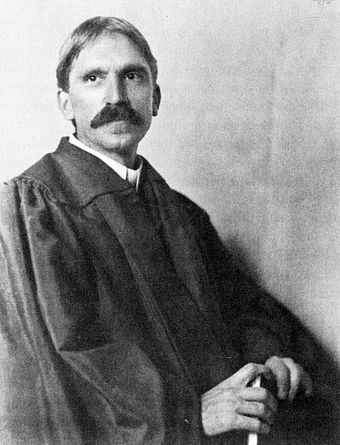
 In 1899. Dewey proposed in School and Society that “if our education is to have any meaning for life, it must pass through an equally complete transformation” and that with this transformation “we shall have the deepest and best guarantee of a larger society which is worthy, lovely, and harmonious” (Dewey, 1899).
Our History
Indebted to its 20th century forebears in the Progressive Education Association (PEA) and the Network of Progressive Educators (NPE), the Progressive Education Network promotes a vision of progressive education for the 21st century—affirming time-honored philosophical and pedagogical principles, and amplifying its commitment to social transformation.
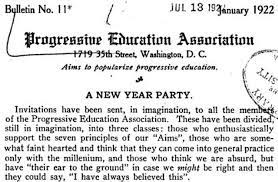 Marietta Pierce Johnson and other self-identified progressive educators founded the Progressive Education Association and launched its seminal quarterly publication, Progressive Education, to promote its newly adopted tenets of progressive education. “For three decades, these principles and the progressive education movement would fundamentally alter the course of American education” (Little, 2013).]
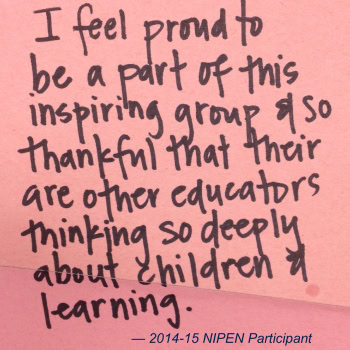 In 2014, PEN held its first “National Institute of the Progressive Education Network” (“NIPEN”), a multi-day, twice-annual gathering of a cohort of progressive educators from the public and private sectors, to engage in shared inquiry and reflection to refine their practice.
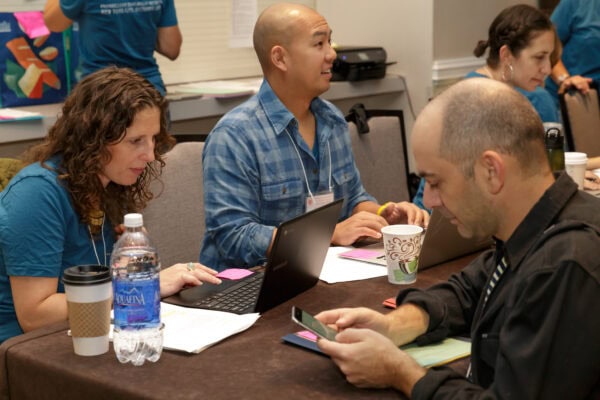 In 2016, following its 2015 conference on “Access, Equity, and Activism,” PEN adopted revised “Principles of Progressive Education” to foreground the movement’s commitment to racial and social justice not only in educational theory but also in pedagogical practice. PEN also released an explicit “Statement on Progressive Education and Racial Justice.”
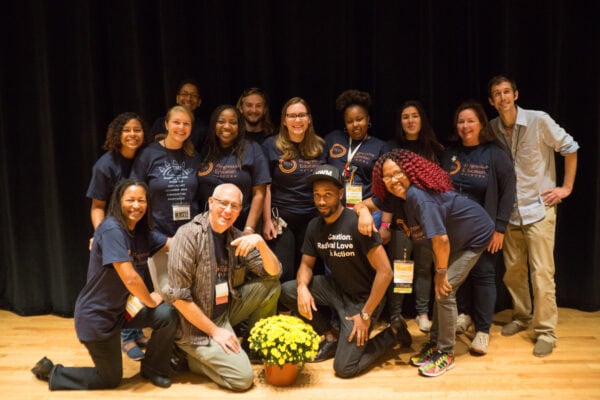 In 2017, PEN published its first Journal of the Progressive Education Network to encourage continued dialogue and inquiry about progressive educational principles and practices.